
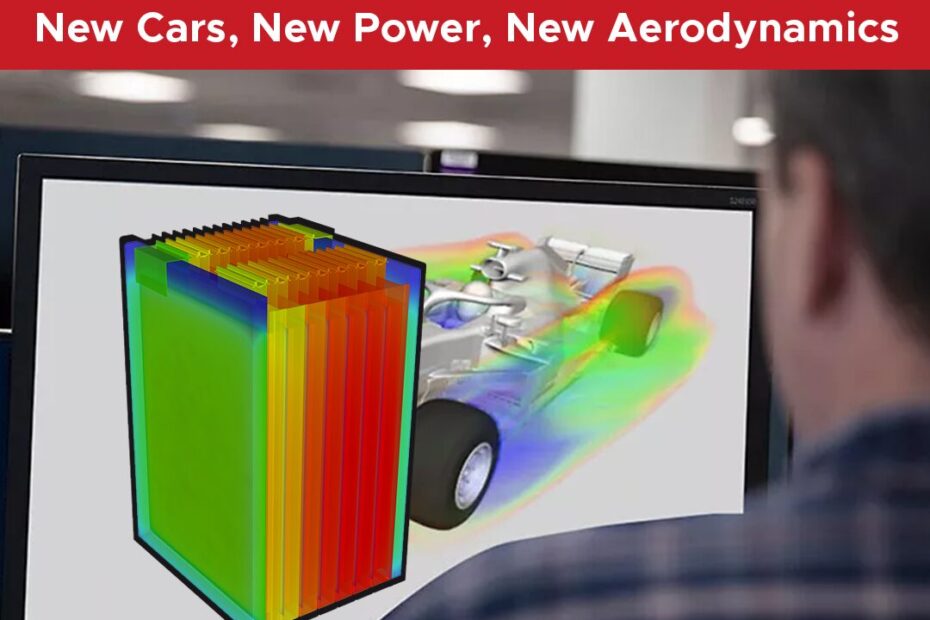
An exciting new season of F1 is upon us, bringing brand new 50-50 split hybrid-powered cars and a host of new regulations to go with them. With the first race of the 2026 FIA Formula 1 World Championship taking place in Melbourne this weekend, what better time to take a closer look at the aerodynamics rule changes and how the latest enhancements to Ansys Fluent can help teams make the most of them.
The goal of the new generation of power units is to significantly increase electrical power, shift to 100% sustainable fuel usage and enhance road relevance to manufacturers. These new power units and the associated usage restrictions have not only changed how the drivers run their race, but have ultimately resulted in smaller, lighter, and more agile cars that reduce drag on straights to complement the new regulations.
Key aerodynamic rule changes:
- Active Aerodynamics: Both front and rear wings will move to optimise performance. They will flatten on straights to reduce drag, regardless of the gap to the car ahead.
- No More DRS: Traditional DRS is replaced, but a new “Overtake Mode” (using electrical power) will be available to drivers within one second of the car ahead.
- Active “X-Mode” & “Z-Mode”: The cars will use a “Z-mode” (high downforce) for corners and an “X-mode” (low drag) for straights, with some designs allowing the entire rear wing to flip.
- Smaller, Lighter Cars: The wheelbase will be reduced from 3600mm to 3400mm, and the width will drop from 2000mm to 1900mm, making the cars nimbler.
- Reduced Ground Effect: The floor design is flatter and less aggressive to reduce the tendency for cars to bounce (porpoising).
- Narrower Tires: Front tires will be 25mm narrower, and rears 30mm narrower.
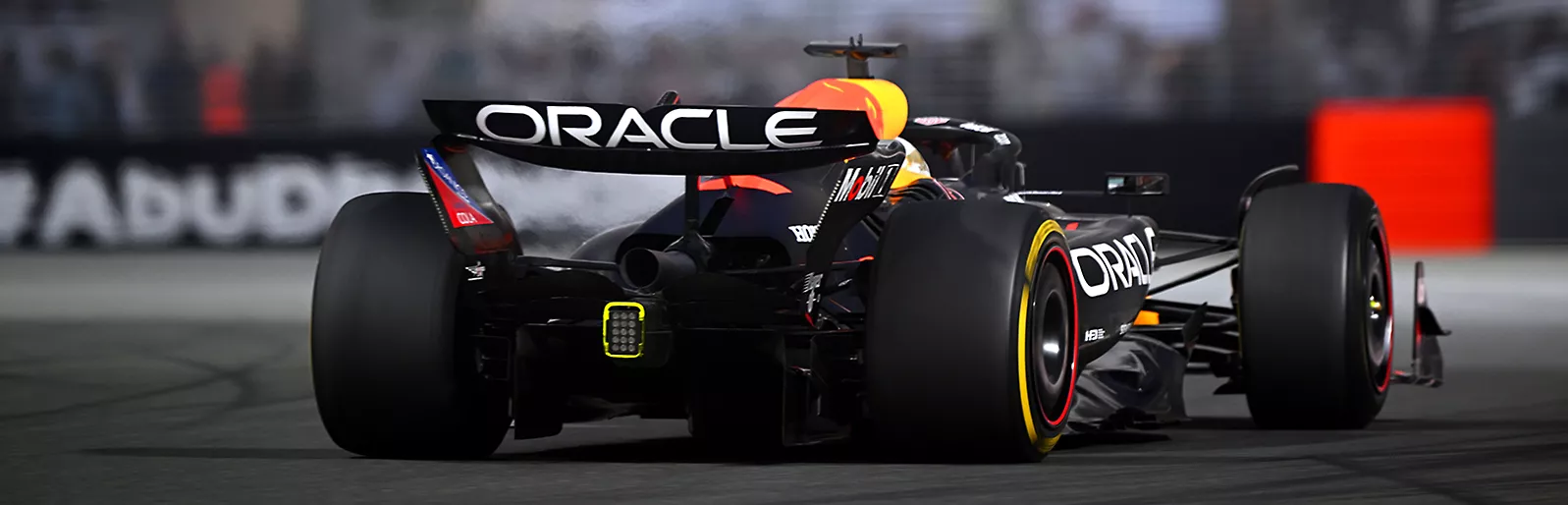
The biggest of these changes that F1 fans will notice is the implementation of active aerodynamics. This is also the area that has already seen the biggest point of difference between teams and how they have designed for the new system with large variations in how the rear wings are being actuated. Some teams opted to stick with the DRS method of hinging at the top of the wing, some adopted a centre pivot in the middle of the two upper elements, while others went with a front pivot so they folded “down” to be in line with the main plane of the rear wing.
In fact, long-term Ansys users Ferrari stunned the F1 paddock during pre-season testing in Bahrain when Lewis Hamilton showcased the team’s unique rear wing design which flips the upper two elements upside down when the active aero is deployed for an even bigger opening. See it in action in the video below.
Such variation in the approach to dealing with this one change highlights the impact simulation can have on informing these design decisions, and the importance of rapid design exploration – a task that has never been easier thanks to the many time-saving enhancements in Ansys Fluent 2026R1.
The video below from over two years ago gives insight into how Oracle Red Bull Racing uses simulation to get the most out of each aspect of their design and now, as a result of these changes there are a whole host of new parameters to investigate and optimise, not just on the exterior of the car, but also on the power unit itself.
The new power units pose new challenges for teams due to their extremely high charging and discharge rates and associated thermal management challenges. A Tesla Model 3 performance for example will discharge roughly 4C with an 82 kilowatt hour battery will discharge at 343 kilowatts peak, so it would drain itself four times in an hour. These already have significant cooling and thermal management challenges however, compare that to the new F1 power unit battery, operating at above 300C. They have to completely charge and discharge several times per lap for hours at a time whilst managing their temperature and not losing performance. With 2026 R1, Ansys Fluent allows for the simulation of battery thermal management with the powerful GPU solver, allowing for rapid assessments of battery performance under various conditions and the cooling requirements. Thermal abuse models can also be included to assess the performance degradation over the life of the battery and cells in their harsh environments.
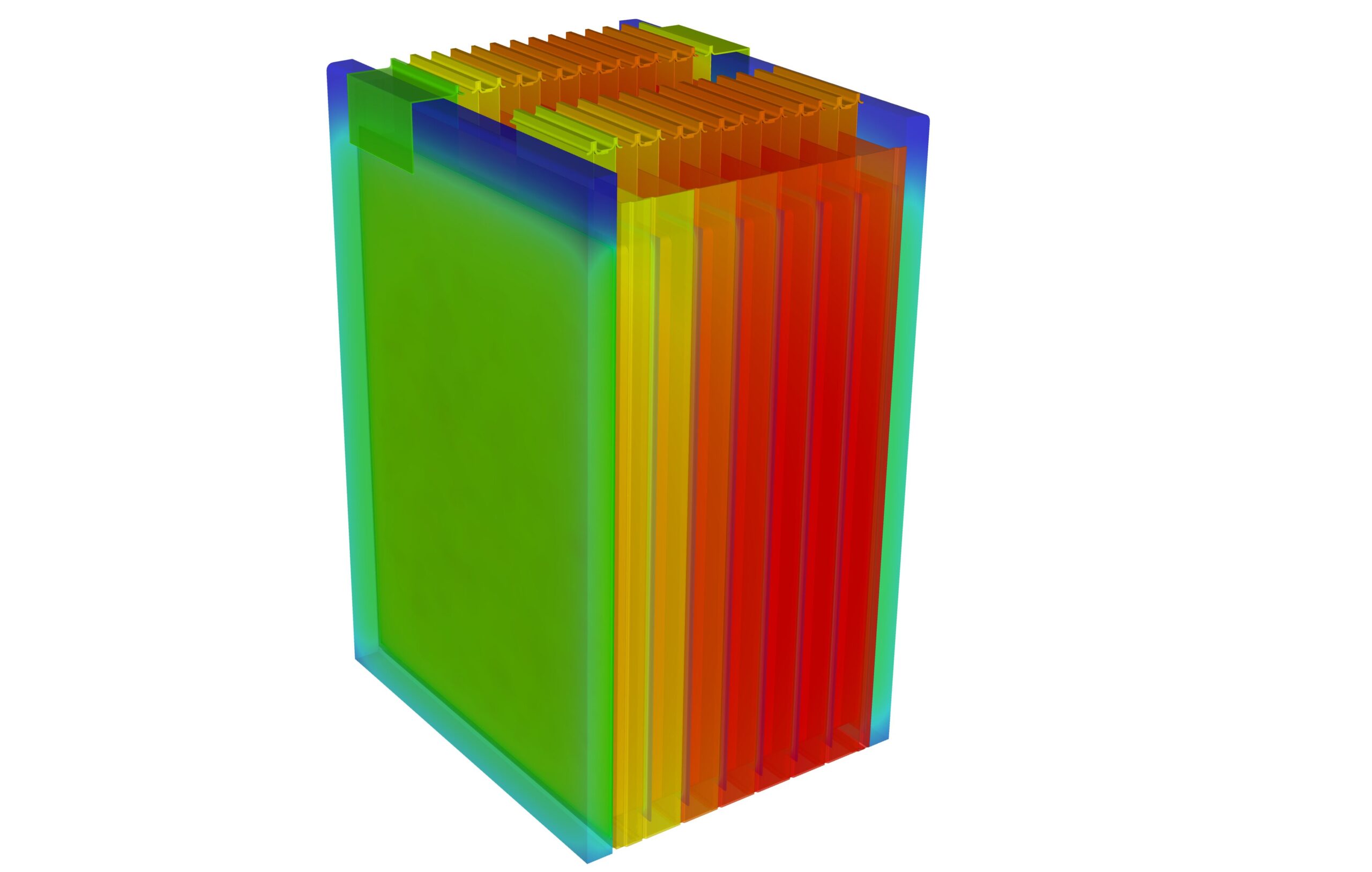
Simulated thermal steady state of battery cells and module with no cooling measures
ABC News took a deep dive into the new F1 changes in a recent article, quoting Mercedes F1 team representative Bradley Lord, who stated, “In pure acceleration terms, they are quicker. They’re incredibly impressive when you see them coming out of the corners at full power,” But he added that in the corners themselves, the cars are “sliding a little bit ” so will probably seem “more fun and entertaining for the drivers” (and the fans!).
Speaking to the ABC, former Williams engineer Sammy Diasinos said one of the biggest changes contributing to a lack of downforce is the shape of the car’s floor.
“The floor has to be much simpler relative to the previous generation cars, which had hugely complex floors that generated a lot of downforce by having a carefully contoured floor very close to the ground,” he says.
This year, the cars will be higher off the ground, which will force more air underneath the car and increase downforce.
Mr Lord says as a result, they won’t bash into the ground as they had done the past four years.
This is a well-known issue for the last set of cars, says Dr Diasinos, who is now a lecturer at Macquarie University.
“A lot of drivers in the previous generation cars complained about how uncomfortable it was for them,” he says.
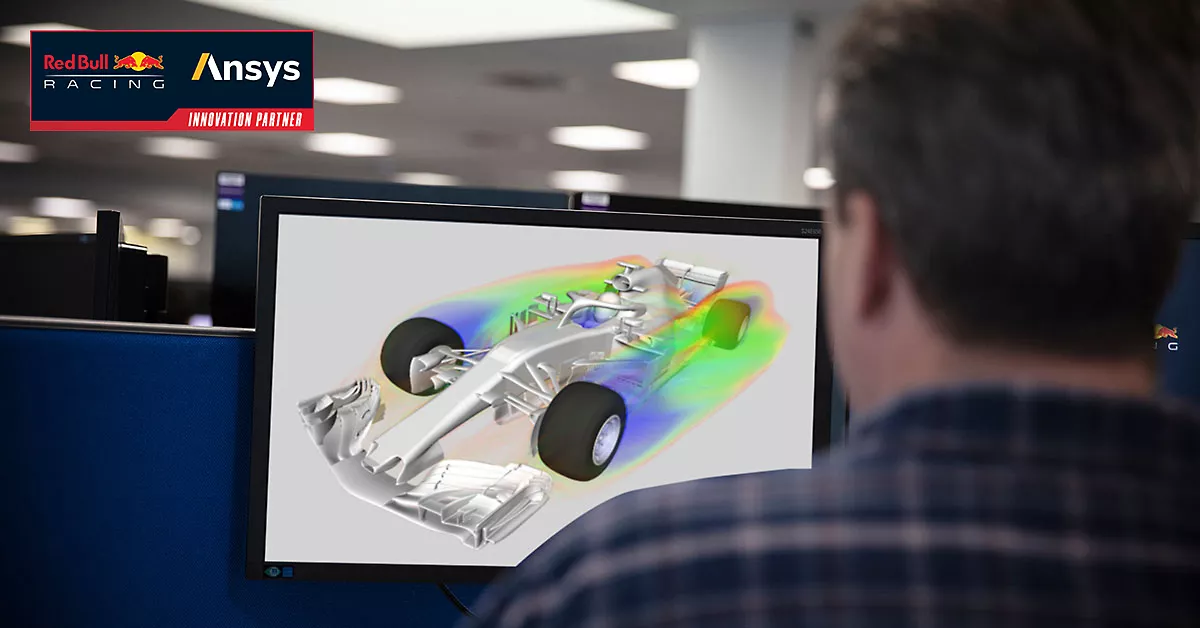
Red Bull Racing engineers use Ansys to optimise aerodynamic simulations
So what should fans expect in Melbourne this weekend?
End Results: Cars quick in straight but slower through corners, slower lap times expected
- Design constraints produce ~30% less downforce and drivers braking more to regain energy for their battery.
- But the cars can accelerate faster on the straights due to bigger battery capacity, which allows drivers to release more energy.
- The previous system that helped with generating downforce has been removed in favour of “active aerodynamics”, where both the front and rear wings move. The cars have a straight-line mode at the push of a button to limit drag, opening both front and rear wings to have a gap. And a corner mode will automatically kick-in when braking, giving a boost of downforce and grip as the wings shut.
While there has been a lot of change this year with new cars, new regulations and new aerodynamics, we will see a lot more refinement, optimisation and ultimately performance in the race weekends to come as teams utilise tools like Ansys Fluent to get the absolute most out of every aspect of their designs.