
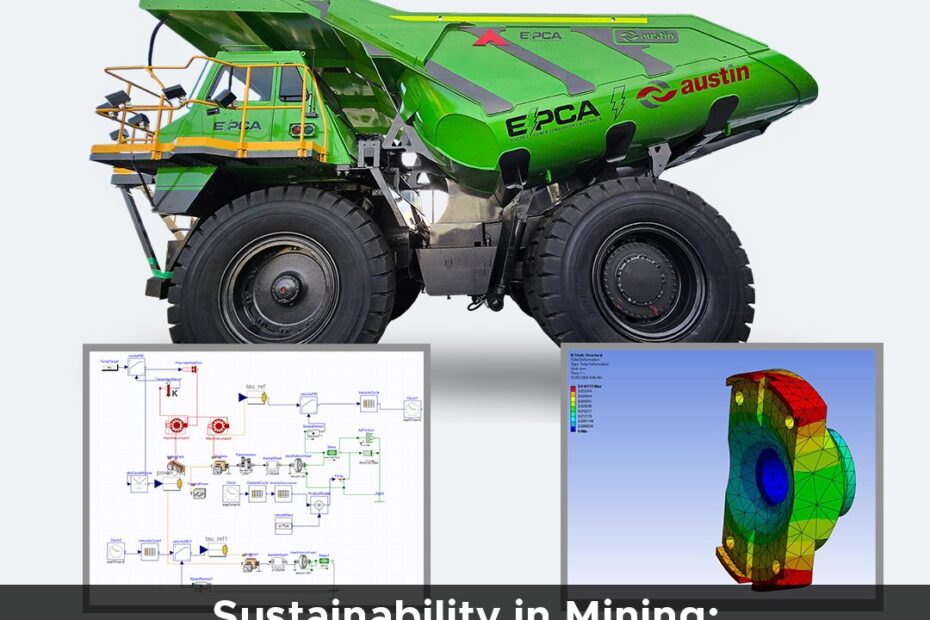
Mining has always demanded ingenuity, but the pressures of the past few years have sharpened that need considerably. Disrupted oil supply chains and soaring diesel prices have forced mine operators to take a hard look at how exposed their operations really are to forces beyond their control.
Australia’s position is particularly stark. The country imports around 90% of its liquid fuels and is the world’s single largest importer of diesel. When refinery or shipping disruptions hit, the knock-on effects are felt across the whole economy. With the mining industry alone accounting for roughly 35% of Australia’s diesel consumption, much of it at remote sites far from alternative supply, volatile oil markets have become more than a cost headache. They are an energy security problem.
At the same time, decarbonisation pressures haven’t eased. With battery and EV costs continuing to fall, electrification has become the most credible path to cutting emissions at scale.
For mine operators, the fastest way to capture both benefits isn’t always buying a brand-new fleet. Often, it’s retrofitting the diesel haul trucks they already own. That’s where advanced simulation becomes invaluable. By digitally modelling duty cycles, grades, payloads, thermal loads, and charging strategies before a single bolt is turned, EPCA’s engineers can right-size batteries, optimise drivetrains and thermal systems, validate safety and performance, and de-risk the business case entirely.
EPCA: Reimagining the Mining Truck
In this guest blog, EPCA walks us through how their simulation-led retrofit approach compresses development timelines, preserves existing asset value, and delivers reliable, zero-emission haulage, even in the face of environmental and geopolitical headwinds.
EPCA, a Perth-based startup, is at the forefront of this shift. The company focuses on battery-electric retrofits for mobile mining equipment and was founded by Clayton Franklin, a former lead engineer at Fortescue who turned a hydrogen hybrid truck project into a broader vision for electrified mine machinery. EPCA’s goal is straightforward: take the diesel equipment mines already own and give it a sustainable second life with the ambition to become Australia’s first Aboriginal-owned mining contractor supplying electric fleet solutions.
Market Focus
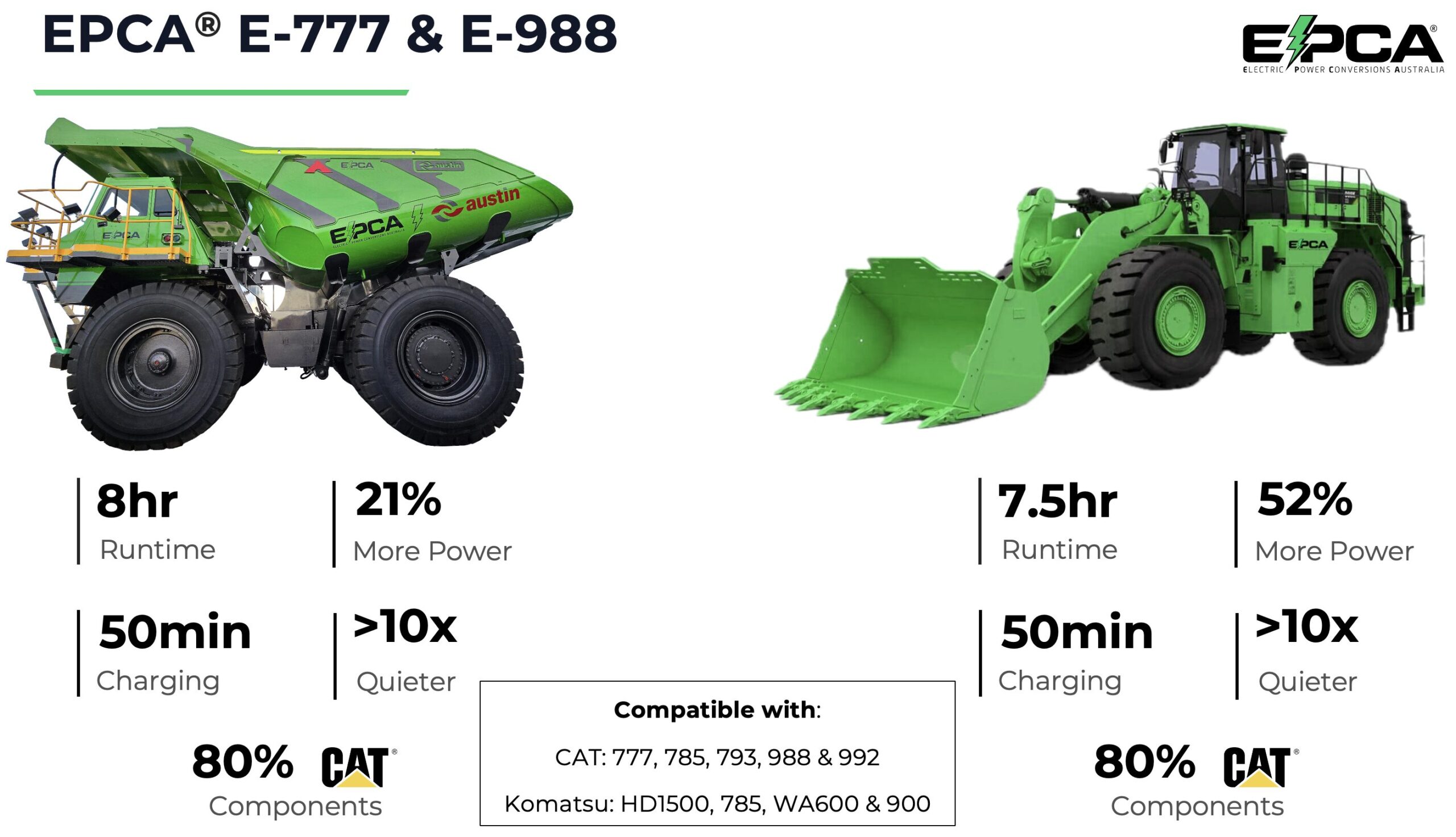
EPCA’s current focus is on the 100-ton and 150-ton truck payload, as well as wheel loaders and other equipment. Rather than competing with the major OEMs on large-scale new builds, EPCA has carved out a niche in retrofit solutions for the mid-range fleet. Their most notable achievement to date is the world’s first battery-electric retrofit of a Caterpillar 777D, which EPCA unveiled at the Electric Mine Show in 2024 after a 6-month engineering design and build.
Achievements in Retrofitting
The retrofit itself is a substantial engineering undertaking. The EPCA team strips out the diesel engine, torque converter, and fuel system, replacing them with a custom-designed cooling system built specifically for the thermal demands of battery packs and power electronics. The results go beyond zero emissions: noise tests show that the electric truck is ten times quieter than its diesel counterpart under comparable working conditions, which makes a real difference over a long shift.
After its debut at the Electric Mine Show, the truck moved into an extended testing phase at a privately owned sand mine at Bakers Hill near Perth, where the team spent several months collecting real-world operating data. That trial period also gave potential clients the chance to see the truck running in anger, generating considerable interest in the market.
Ansys Integration
As the retrofit program matured, it became clear that gut instinct and experience alone wouldn’t be enough. The team needed precise, defensible engineering analysis, and that’s where Ansys software came into play. EPCA now uses a range of Ansys tools, including Ansys Twin Builder, across their design and engineering workflow.
Rather than building new trucks from scratch, EPCA’s model centres on working with a client’s existing fleet. When a major operator like BHP or Rio Tinto asks EPCA to evaluate their equipment, the engagement starts with a feasibility study. This involves performance calculations to estimate how a retrofitted truck would actually perform in that specific operating environment.
Once that study is done, EPCA presents the findings and gives the client a clear recommendation on whether to proceed, based on the equipment’s duty cycle. If they get the green light, the detailed design phase begins, covering control philosophies, system architecture, and the integration of Ansys modelling tools to accurately simulate vehicle dynamics and performance.
Digital Twin Model for Simulation
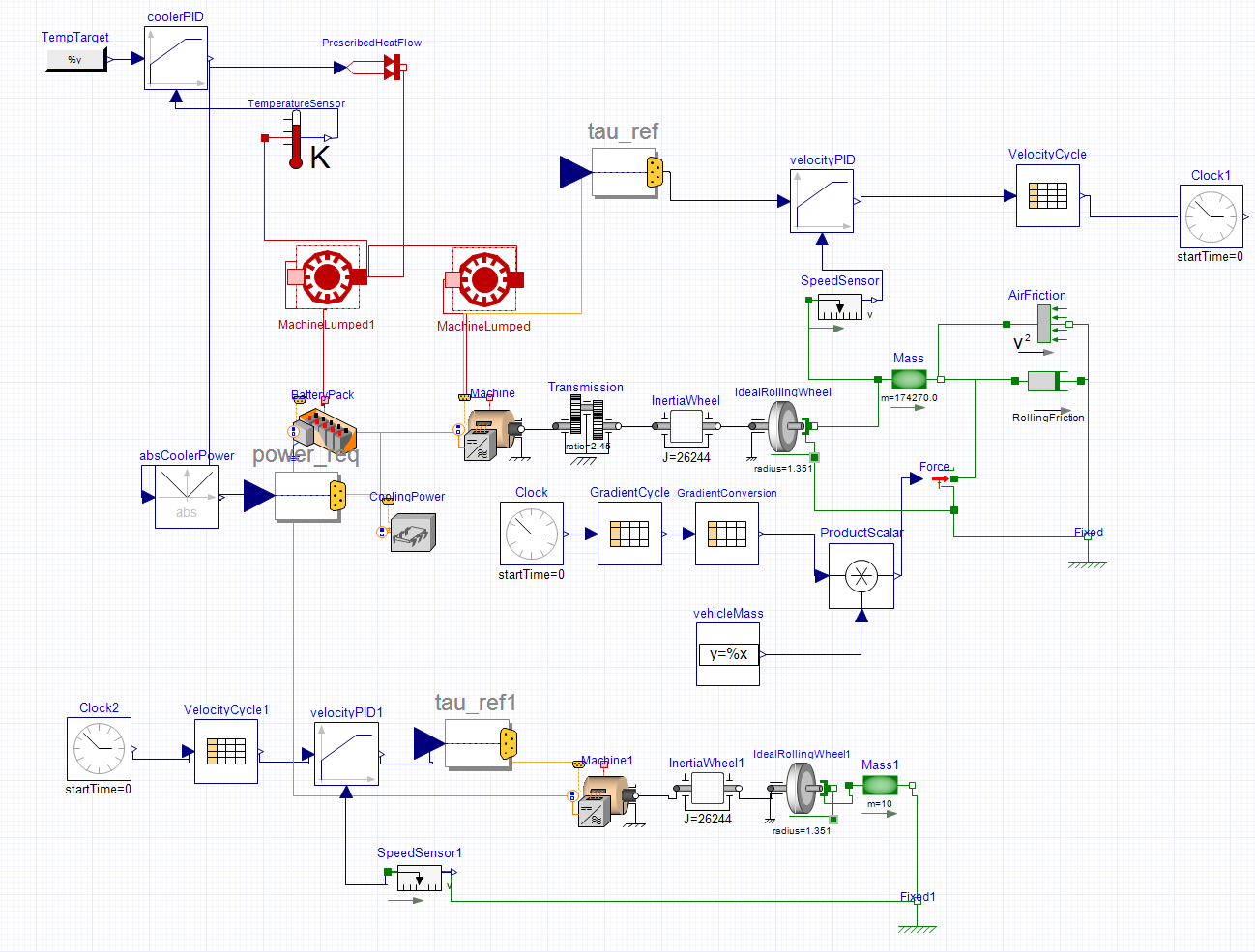
At the heart of EPCA’s engineering approach is a multi-physics digital twin model that simulates the full performance of the retrofitted truck before it ever turns a wheel. The model is built around three interconnected subsystems: mechanical, electrical, and thermal.
- Mechanical Subsystem: Covers vehicle dynamics such as rolling resistance, load conditions, and aerodynamic drag.
- Electrical Subsystem: Models battery pack capacity, DC internal resistance (DCIR), and system efficiency, including hydraulic components.
- Thermal Subsystem: Electric motors and batteries generate significant heat, so managing thermal performance is non-negotiable. EPCA models chillers and air-blast coolers to keep everything running within safe temperature limits.
The key inputs EPCA needs from each client are the velocity profile, the haul road gradient, fuel consumption and cost, and duty cycle. Together, these define how the truck will perform and how the battery will hold up across a full shift.
Accuracy and Validation Challenges
In terms of model accuracy, the electrical subsystem has been the most straightforward to validate, with battery energy capacity and efficiency being relatively well-defined parameters. Mechanical modelling is where things get harder. Simulating transmission efficiency, for instance, has proven genuinely difficult, and while test data were achieved within 90% accuracy, the EPCA team knows there is more work to do. They’ve now run feasibility studies for a range of clients, including Branch Resources, Iron Road in South Africa, and Strandline Resources.
The model is currently partially validated, and EPCA is transparent about that. With LEAP’s support, they established a solid baseline and have continued to build on it. Early on, they reported having made the mistake of trying to validate the whole system at once, which made it nearly impossible to isolate where errors were coming from. Shifting to a subsystem-by-subsystem approach has been a turning point, particularly for the electrical components where manufacturer data is more accessible.
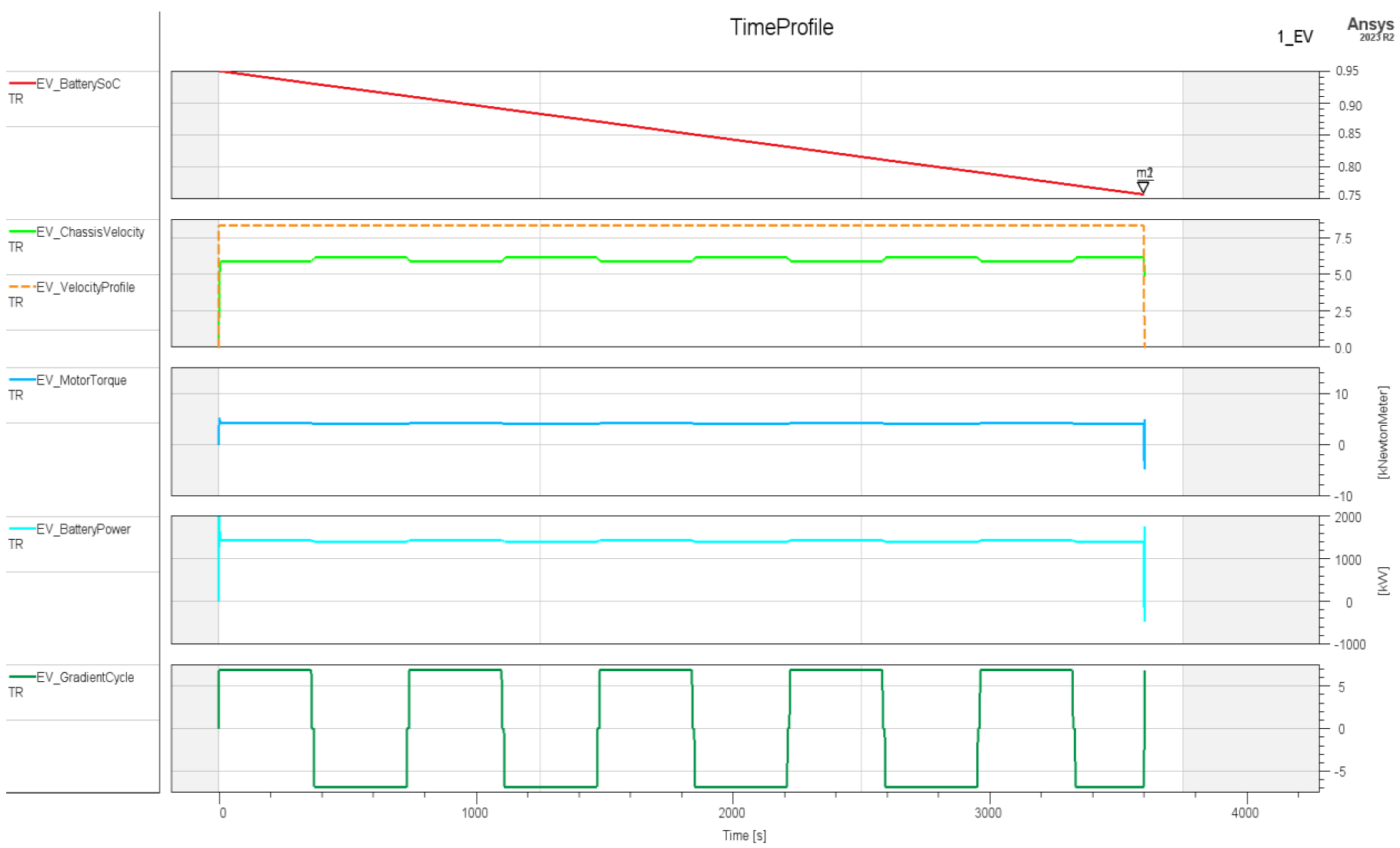
Mechanical and thermal components remain more difficult, largely because OEM suppliers don’t readily share the granular data EPCA needs. For now, validation has focused on straight-line performance given the testing site’s environment. The next step is to better account for lateral loads, steering, and braking forces, which will significantly improve the results.
Variable transmission modelling is another ongoing challenge. Currently, gear ratios are set manually during simulation, which is a workaround rather than a solution. Validating the coefficients for mechanical friction and aerodynamic drag remains on the engineers’ to-do list, with progress dependent on improved data access from OEMs.
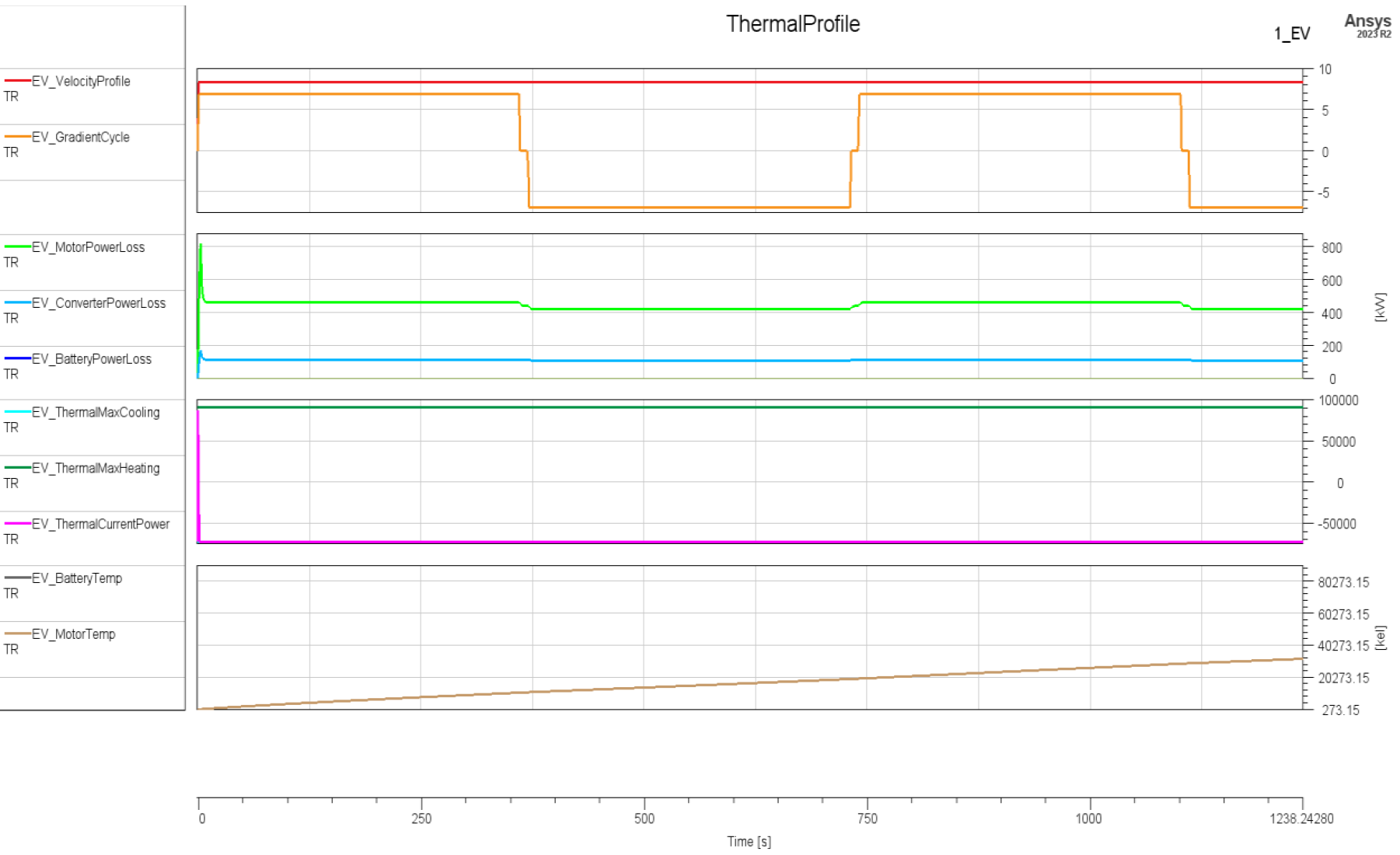
On the thermal side, EPCA built collaborative relationships with manufacturers that have helped with data acquisition and conceptual validation. For now, they rely primarily on manufacturer data, but the roadmap includes deeper integration of Ansys Fluent alongside Twin Builder to take our thermal modelling to the next level.
Client Engagement and Risk Management
Once the feasibility study is signed off, it moves into detailed truck design. One of the most important things learned working with mining clients is how risk-averse the industry is. Introducing a battery-electric truck means introducing unknowns, and for operators whose margins depend on uptime, that’s a serious concern. EPCA’s role is to remove as much of that uncertainty as possible through rigorous documentation and independent validation.
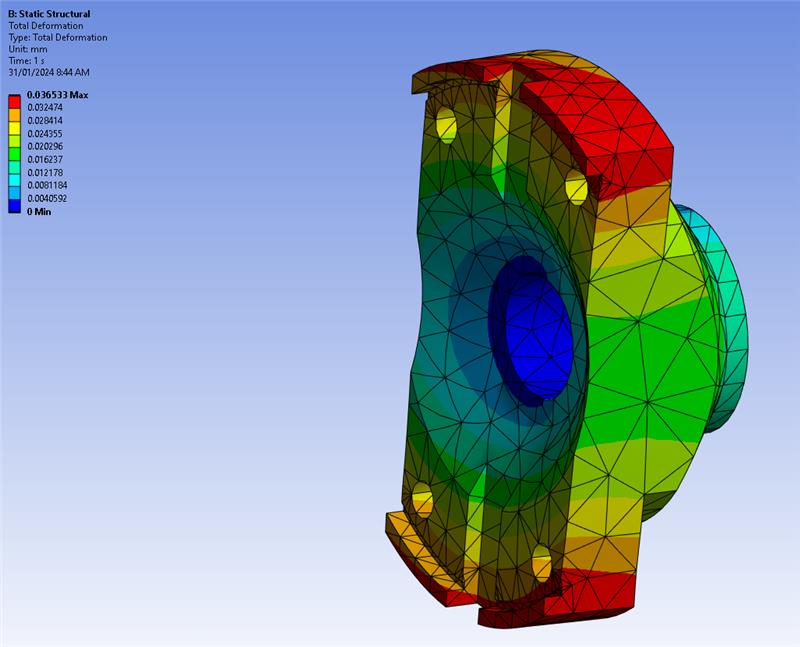
A key part of building that confidence is delivering comprehensive Finite Element Analysis (FEA) reports that cover both structural analysis and, where required, modal analysis. Take the battery cradle as an example: it holds around six battery packs with a combined weight of roughly nine tonnes. EPCA runs full Ansys FEA on that component to verify its structural integrity. Battery manufacturers often request this independently too, wanting assurance that the cradle can handle the load and remain stable. Modal analysis is also sometimes required as mining trucks operate in rough conditions with significant vibration, and it’s critical to confirm the cradle won’t reach its resonant frequency under those conditions.
CAD & Product Data Management
For 3D CAD modelling and PDM, EPCA use Creo and Windchill from PTC, supported by LEAP. After a surface scan of a truck is performed, the team put that into Creo and add the electric powertrain and other internal components to see how it all fits together before they event start to build. Product data is managed within Windchill to improve efficiency and enable repeatability, ensuring important lessons learned are retained for future projects.
In this video, Clayton Franklin, Founder & Chief Engineer of EPCA explains how he & his team uses simulation with Ansys TwinBuilder as well as CAD/PDM with PTC Creo & Windchill for their electric powertrain conversions.
Summary of Achievements with LEAP
In over three years, EPCA has achieved major milestones, and LEAP has been a key part of that journey.
On the partnerships front, EPCA has teamed up with EMJC, an earthmoving company based in Hazelmere, which provides trades support and on-site practical assistance. ZEV and Magnatech have recently come on board as custom battery solution providers, and collaboration with both is growing.
The world’s first battery-electric retrofit of a Caterpillar 777D remains one of EPCA’s proudest achievements. In the 100-ton off-highway class, only a handful of comparable machines exist globally. EPCA designed, built, and tested and validated the truck. A private sand mine provided the ideal proving ground, and contract negotiations with mining operators are progressing well. The team is confident an announcement is coming soon.
EPCA is also expanding into loader retrofits. Trucks have been the natural starting point as removing the diesel drivetrain frees up substantial space for battery packs. Wheel Loaders present tighter packaging constraints, but the team is working through those challenges as they’ve started the electrification of a Caterpillar 988 for a WA miner.
Recognition has come in other forms too. EPCA has received multiple government grants and awards, including the Clean Energy Future Fund grants and the Commercialisation Bridge Grant, along with a MRIWA grant specifically for the cooling system development. Further grant applications are in progress to support the next phase of growth.
To learn more and follow EPCA’s progress, visit https://epca.net.au/.