
As data centres scale to meet the explosive demand for AI and cloud computing, thermal management, power delivery, and airflow design have become mission-critical engineering challenges. Ansys simulation gives data centre designers and operators the tools to predict and optimise performance before a single rack is installed, modelling everything from chip-level heat dissipation and liquid cooling loops to room-scale airflow and facility-wide energy efficiency.
By integrating computational fluid dynamics, electronics reliability analysis, and finite element analysis into a single digital workflow, Ansys enables engineers to design denser, more efficient, and more resilient data centres, reducing costly physical prototyping and downtime while accelerating time to deployment.
LEAP works with data centre designers, operators, and equipment manufacturers across Australia and New Zealand to apply this simulation-driven approach, helping teams tackle rising rack densities, next-generation cooling strategies, and sustainability targets with confidence.
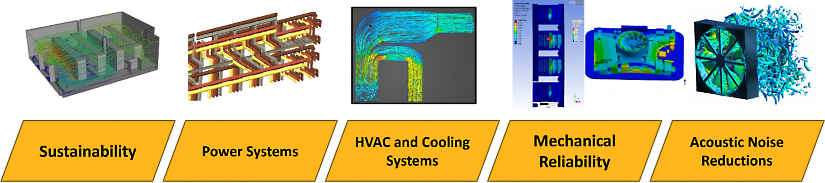
As the demand for higher rack densities, driven by the escalating needs of AI workloads, continues to surge beyond 50 kW, designers and operators of data centres face significant challenges. Transitioning from traditional air cooling to liquid cooling systems introduces a host of complexities, including uncertainties around pressure drops, thermal distribution, and system integration. Resolving these through physical prototyping alone is slow and expensive, and mistakes found after installation are far costlier to fix than mistakes found in a virtual model.
Ansys simulation solutions offer a powerful response to these challenges, enabling precise calculations of flow characteristics, thermal distribution, and pressure drop across various cooling methods before the prototyping phase. With Fluent CFD and Flownex simulation, designers can gain insight into critical aspects such as thermal flow analysis, coolant flow dynamics, and server-room airflow management.
Because cooling is typically the largest non-IT energy consumer in a data centre, it’s also where the biggest efficiency gains are available. Data centre efficiency is measured using Power Usage Effectiveness (PUE) — the ratio of total facility power to power consumed by computing hardware — with a PUE near 1.0 indicating that virtually all power goes to compute rather than overhead. Hyperscalers aim to achieve a PUE of 1.1–1.2, compared with an industry average of 1.4–1.5. As rack densities climb, the cooling strategy chosen directly affects where a site lands in that range, making the case for rigorously modelling cooling performance before it’s built.
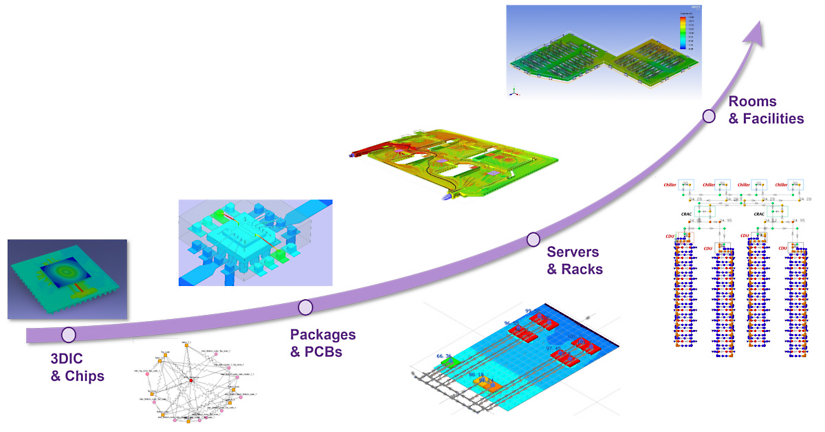
Designing efficient cooling solutions for data centres requires understanding thermal dynamics across multiple physical scales, from chip packages to room-sized facilities. Engineers often struggle to evaluate performance at these scales without the practical means to build a full 3D CFD model for each stage. Relying solely on detailed 3D simulations can be time-consuming and hinder the rapid iterations required in the early design phases. This complexity can lead to delays and inefficiencies, making it imperative for engineers to seek innovative solutions that streamline evaluation while ensuring effective cooling design.
Comprehensive system-level flow-thermal network simulation using Ansys Thermal Desktop and Flownex can address these challenges by spanning all scales, from millimetres to metres.
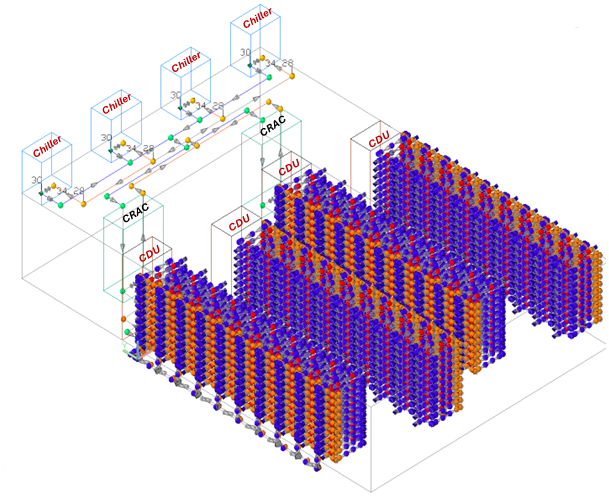
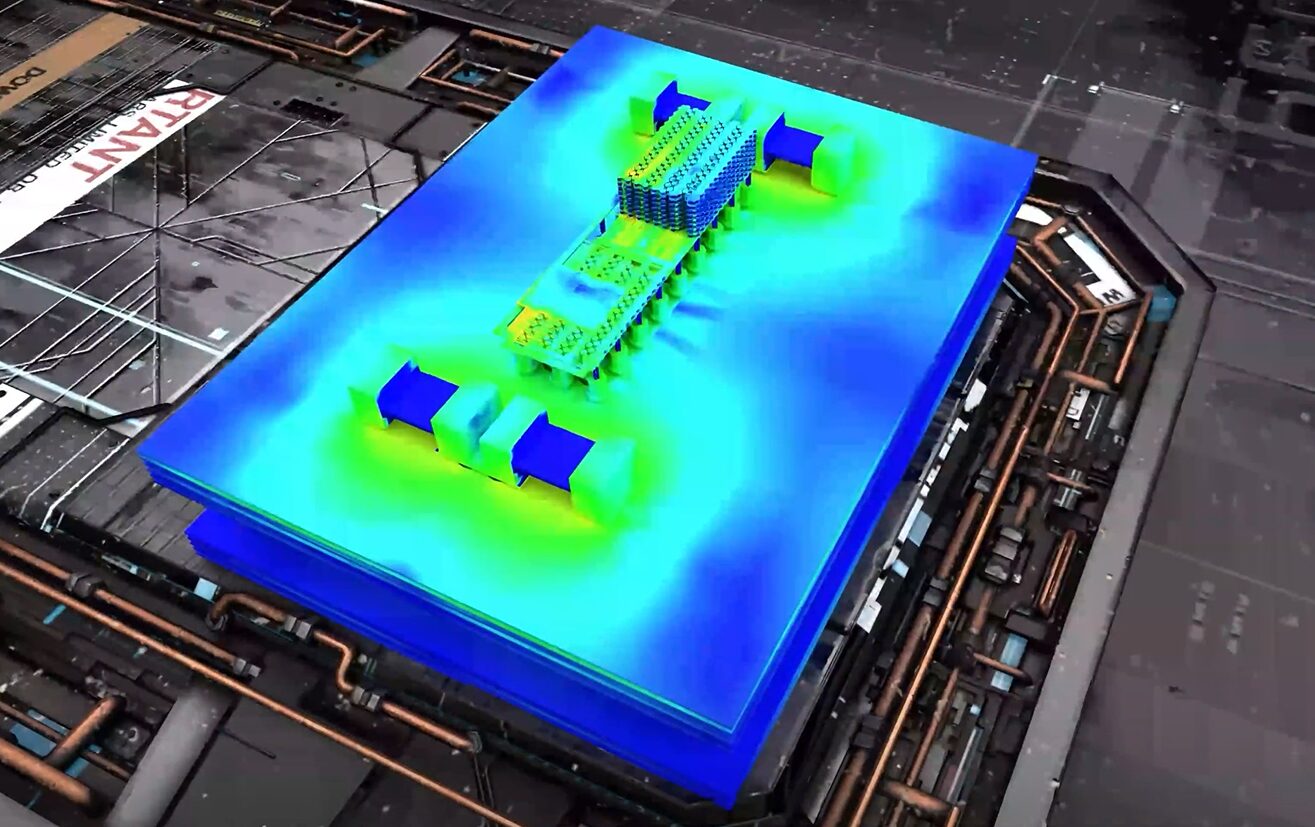
Refrigerant Temperature Distribution – Liquid & Air-cooled facility
These unique 1D to 3D simulation capabilities enable engineers to conduct rapid early-stage design evaluations for both air- and liquid-cooled data centres without compromising accuracy. The platform supports system-level optimisation through statistics, metamodels, and calibration, while its intuitive wizard-based workflow simplifies the simulation process.
Additionally, by integrating with Fluent for co-simulation, engineers can achieve a harmonious balance between the rapid computations of system-level analysis and the detailed insights of 3D CFD, enabling them to refine designs and enhance thermal performance efficiently and effectively across the entire cooling system.
Data centre operators must prioritise the resilience of their cooling systems, given the consequences of equipment failure. A coolant distribution unit (CDU) circulates contaminant-free coolant in a closed loop, maintaining precise temperature, pressure, and flow rate to serve direct-to-chip and immersion cooling devices. Because CDUs typically run with redundant pumps and power inputs, a single unit dropping out shouldn’t take a facility offline on its own — but confirming this in practice, across chillers, CRACs, and every CDU in a system, is where the real risk lies. Physically testing these failure scenarios in a live facility is impractical and risky, leaving how components interact during a failure a genuine blind spot in the design process.
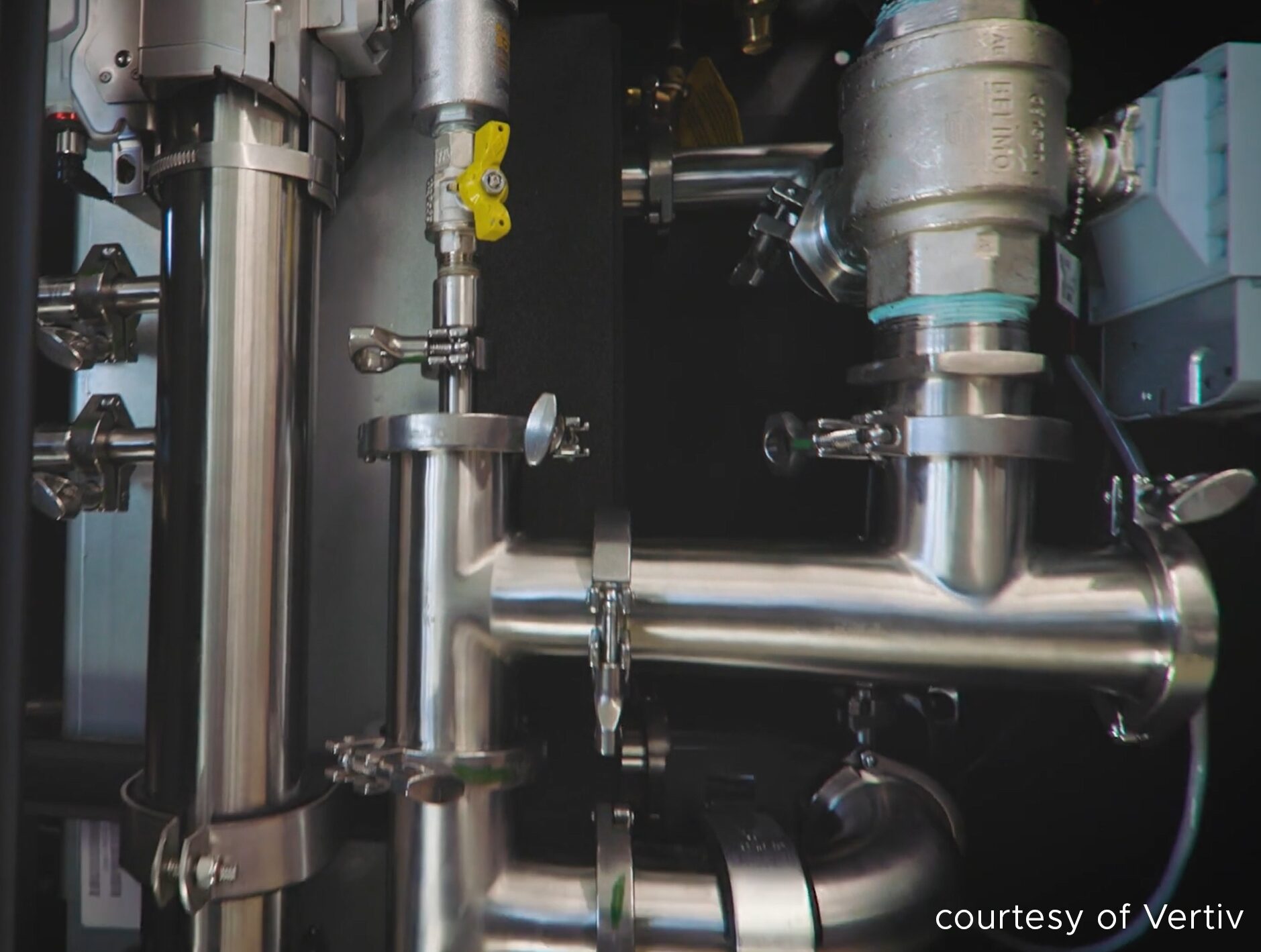
Tools such as Ansys Thermal Desktop and Flownex can address this through fluid-systems network modelling, simulating both liquid- and air-cooled facilities, including chillers, Computer Room Air Conditioners (CRACs), and CDUs. This enables engineers to run single-phase, steady-state analyses to evaluate redundancy and failure scenarios before they occur in the field.
By simulating the consequences of component failures, such as a CDU dropout, engineers can establish system-level requirements and optimise parameters, including redundant CDU and chiller sizing, to improve reliability before any actual incident occurs. This proactive approach reduces the risk of cooling system failures and supports a more resilient data centre infrastructure.
As data centres adopt liquid cooling, a second challenge runs in parallel: keeping power delivery stable and electromagnetic behaviour within spec as the electrical and thermal environment around each rack changes. Left unmanaged, these interactions show up as reliability problems the cooling design alone can’t explain.
Electrical failure risk also needs to be assessed directly. Engineers use Ansys Electronics Desktop to model arc flash and short-circuit events at the electrical design stage, then use Ansys LS-DYNA to capture the physical effects once a flash occurs, including the pressure wave generated inside an enclosure or switchgear chamber. Modelling that chamber pressure response lets engineers assess containment and structural risk from an arc flash event before it occurs on a live system, rather than relying on standards-based estimates alone.
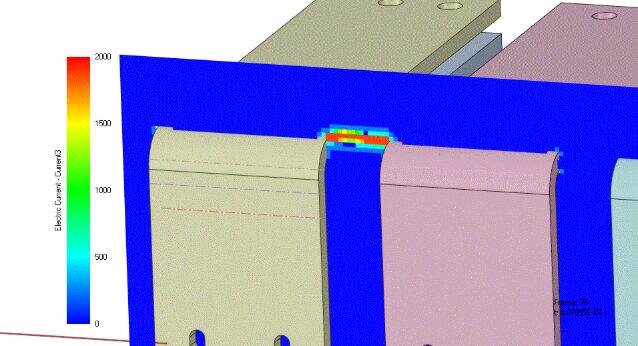
Arc Flash Simulation for Mission Critical Infrastructure
The starting point is understanding the heat a chip or PCB actually generates, since that drives everything downstream in the cooling design. Electrical engineers model this with tools such as Ansys SIwave, which simulates printed circuit board and package electromagnetics, addressing signal integrity and crosstalk between traces and components before they become a problem on the board. From there, the same modelling extends into EMI, thermal, and reliability analysis, performed together rather than as separate checks, and into chip-to-system interaction, tracing how behaviour at the component level propagates up through the board, the server, and the rack.
Resulting pressures after an arc flash event
Data centres face critical challenges in ensuring their structural designs meet stringent seismic and structural codes, particularly in regions prone to seismic activity. Additionally, vibration from cooling equipment can compromise the integrity of server racks and raised floors, potentially causing equipment damage or unplanned downtime. However, conducting physical tests on every configuration to validate structural integrity is often impractical and prohibitively expensive, putting data centre operators at a disadvantage in risk management and compliance.
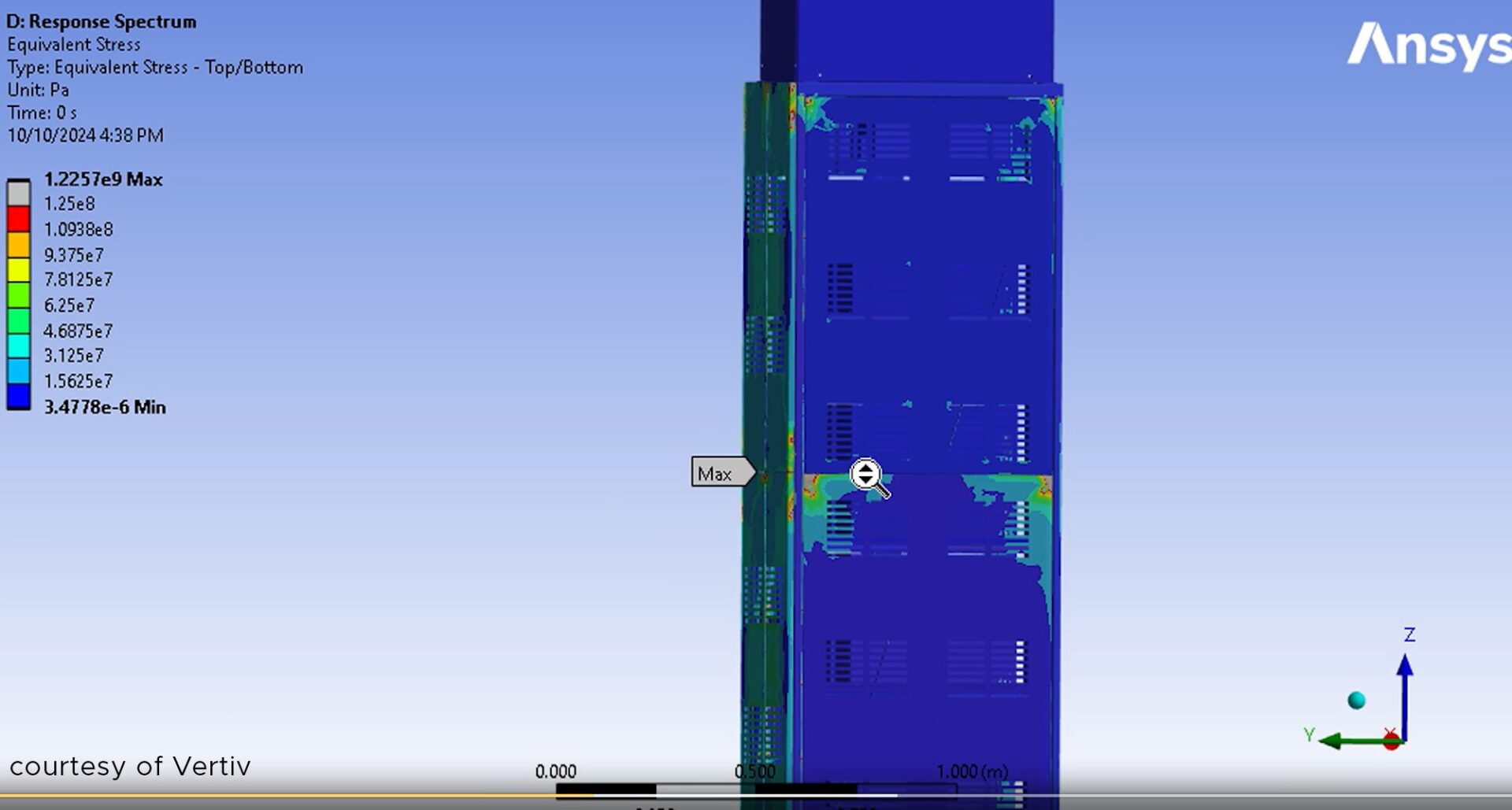
Ansys simulation solutions provide a robust means to conduct virtual structural and modal/seismic analyses of server racks, raised floors, and overall data centre building structures. By leveraging these advanced modelling tools, engineers can validate the structural integrity of their systems under various seismic and vibration loads, ensuring compliance with relevant codes without the need for costly physical testing.
Ansys Fluent
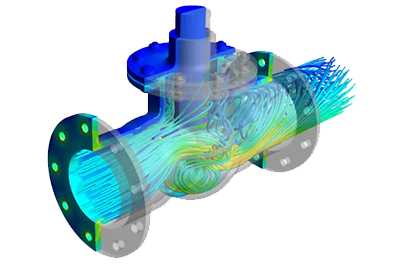
Ansys Fluent is the industry-leading fluid simulation software known for its advanced physics modelling capabilities and industry leading accuracy.
Ansys Mechanical
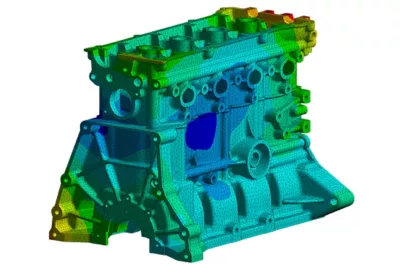
Structural analysis with Ansys Mechanical provides robust general purpose stress, thermal, modal and fatigue simulations for fast and accurate solutions.
Ansys Rocky
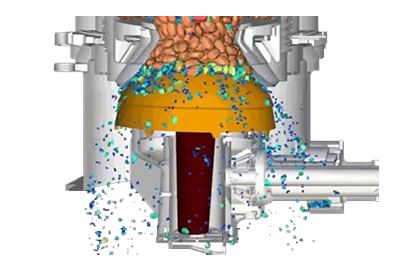
Rocky DEM is the industry-leading discrete element method (DEM) software used for particle dynamics, simulating the motion of granular and discontinuous material.
Ansys Motion
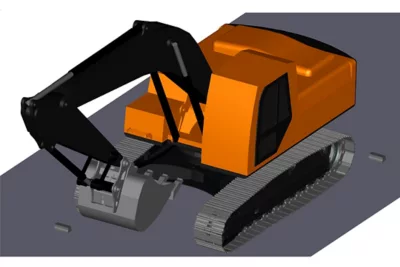
This multibody dynamic solver for analysis of rigid and flexible bodies is capable of accurate evaluation of physical events through the analysis of a whole system.
Ansys Granta
Ansys Granta is a scalable solution to create, control and store your company’s valuable material data, enabling you to capitalise on your organisation’s Material Intelligence.
Complete the form and one of the experts from our Ansys team will contact you to discuss your needs.

COPYRIGHT LEAP AUSTRALIA 2026
Forms not working? Email us at info@leapaust.com.au
Contact LEAP Australia for Technical Support for KeyShot, Moldex or Flownex
During Standard Operation Hours (08:30-17:00 AEST/AEDT, Mon-Fri)
When calling from a mobile phone please dial:
Australia: +61 2 8966 7820
*Our commitment to you is that your call will be acknowledged as soon as possible and no later than 30 minutes after receipt during normal office hours.
Contact LEAP Australia for Technical Support for PTC Software
During Standard Operation Hours (08:30-17:00 AEST/AEDT, Mon-Fri)
When calling from a mobile phone please dial:
Australia: +61 2 8966 7820
Outside the standard working hours
*Our commitment to you is that your call will be acknowledged as soon as possible and no later than 30 minutes after receipt during normal office hours.